by Des Cronin, Head of Animal Health and Nutrition, Inform Nutrition Ireland & Mervue Laboratories
Neonatal calf diarrhoea remains one of the most important health and welfare challenges in UK cattle systems. While hygiene, colostrum management, nutrition and timely veterinary intervention remain the foundations of prevention, increasing attention is being given to nutritional strategies that support the developing gastrointestinal tract and its microbial community.
Neonatal calf diarrhoea (NCD) remains the single most costly and persistent health challenge facing cattle enterprises worldwide. It is the leading cause of morbidity and mortality in the first month of life, accounting for more than half of all pre-weaning calf deaths in many production systems.
Beyond the immediate loss of animals, the condition reduces weight gain, delays age at first calving and affects first lactation milk yield. For the dairy and beef sectors alike, the neonatal period is where herd productivity is either secured or squandered. Increasingly, the answer to this problem lies not in the medicine cabinet but in the gut itself.
Increasingly, the answer to this problem lies not in the medicine cabinet but in the gut itself”
What makes the newborn calf so vulnerable is the state of its gastrointestinal tract. At birth, the gut is effectively sterile, barrier function is immature, adaptive immunity is largely undeveloped, and the animal is entirely dependent on passive transfer of immunoglobulins from colostrum for its early defences.
However, passive transfer provides very little direct protection against the common pathogens that affect its digestive system. The intestinal microbiota is only beginning to develop, and this early community is unstable and easily disturbed. Disruption of that developing ecosystem, dysbiosis, is now firmly linked to a heightened risk of enteric disease. Enterotoxigenic Escherichia coli, rotavirus, coronavirus, Cryptosporidium and Salmonella exploit this window of low colonisation resistance, adhering to the mucosa, producing toxins, and driving the secretory and malabsorptive diarrhoea that dehydrates and often kills.
Moving beyond antibiotics: Building resilience from within
For decades, the instinctive response to a scouring calf was an injection of antibiotics. That response is now firmly out of step with best practice. Contemporary prescription guidelines are explicit that antimicrobials should not be used routinely to treat undifferentiated calf scours, for the simple reason that the majority of cases are viral or protozoal in origin and therefore entirely unresponsive to antibacterial therapy.
Antimicrobials are reserved for calves showing signs of bacteraemia or for confirmed bacterial outbreaks, while the mainstay of treatment remains fluid and electrolyte therapy. This shift is driven not only by clinical logic but by the global need to curb antimicrobial resistance, a concern that has placed the livestock sector under intense scrutiny. The consequence of this is a pressing need for preventive nutritional strategies that build resilience before disease strikes, rather than firefighting after the fact.
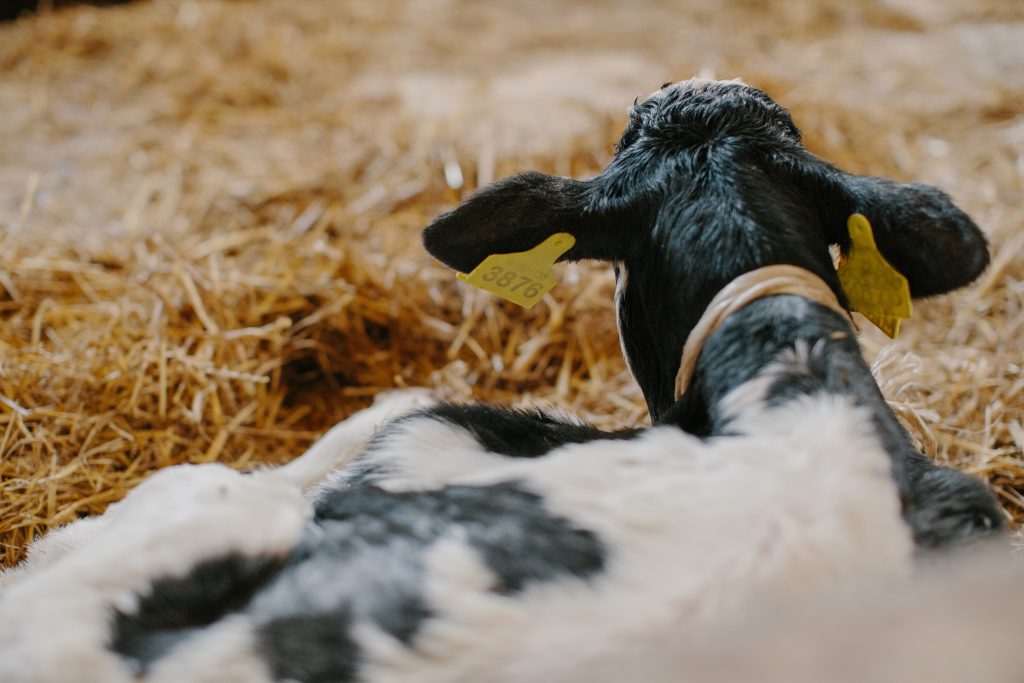
The consequence of this is a pressing need for preventive nutritional strategies that build resilience before disease strikes, rather than firefighting after the fact”
This is the context in which “biotic” feeding strategies have moved from the fringe to the mainstream of calf nutrition. The logic is smart: rather than attacking pathogens directly, these approaches strengthen the calf’s own defences by stabilising the microbiota, reinforcing the gut barrier, and priming the immune system. Three complementary tools – probiotics, prebiotics and postbiotics – form the modern toolkit, and their combined, or synbiotic, application is where the most compelling opportunities lie.
Probiotics: Living allies in the gut
Probiotics are live microorganisms that, when administered in adequate amounts, confer a health benefit on the host. Among the strains studied in calves, Enterococcus faecium has one of the more substantial evidence bases. A trial in early-weaned calves supplemented with E. faecium reduced the proportion of animals experiencing diarrhoea, cut faecal clostridia counts, and improved daily weight gain and feed conversion.
A separate encapsulated E. faecium study likewise reduced the number of diarrhoeic days per animal and the overall percentage of scouring calves, while shifting the faecal flora away from clostridia and toward beneficial enterococci.
More recent work with E. faecium in pre-weaning Holstein calves found a tendency toward reduced diarrhoea occurrence in the critical first two weeks of life, alongside heavier weaning weights and fewer calves testing positive for Eimeria. The mechanistic picture is filling in too: E. faecium strains exert an anti-inflammatory effect on the intestinal epithelium, dampening the local immune over-reaction that damages the gut and diverting energy back toward growth.
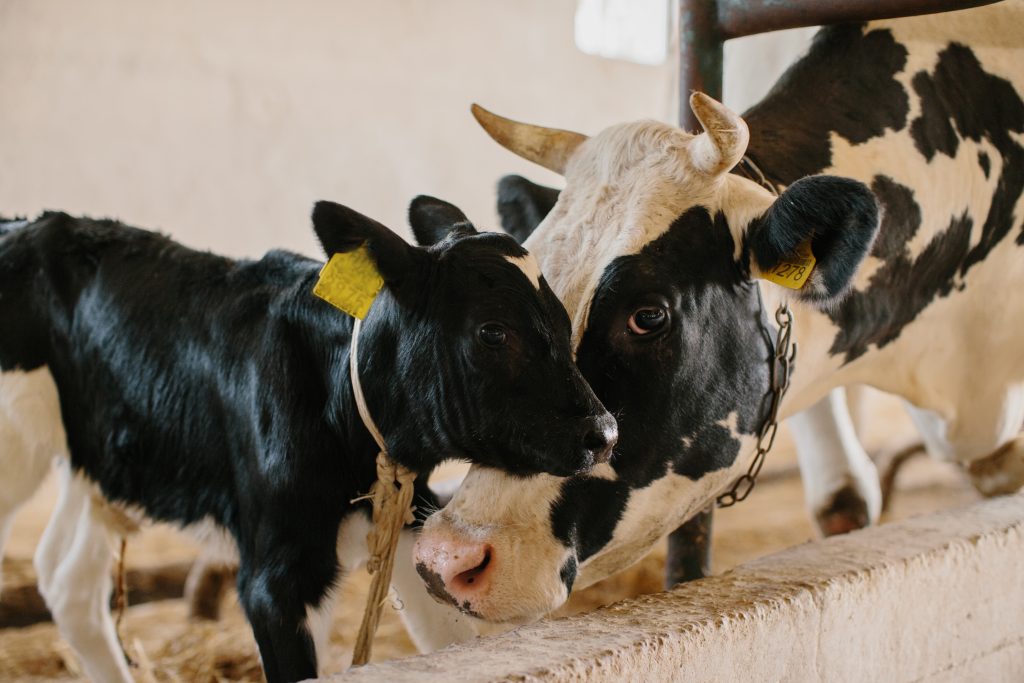
A diverse and well-balanced microbial community is central to calf health”
Prebiotics: Feeding the right microbes
A diverse and well-balanced microbial community is central to calf health. This is especially the case in the first 10 days of life, when the gut is being colonised at its fastest rate, and the intestinal immune system is learning to distinguish normal microbial signals from genuine threats.
The calf gastrointestinal microbiome includes bacteria, fungi, protozoa and viruses, with bacteria the dominant group. Most microbes in a healthy calf are commensal organisms that coexist with the host without causing disease, and many contribute useful functions such as occupying ecological niches that might otherwise be available to pathogens, fermenting dietary substrates, producing beneficial metabolites, supporting the intestinal barrier and helping to educate the developing immune system.
The relative types and abundance changes rapidly with age, diet, colostrum intake, housing and farm environment. The practical objective is not to achieve a particular number of microbial species or types, but to establish a stable, diverse and functionally balanced community.
Research supports the view that disrupting this early microbial development is associated with diarrhoea and intestinal inflammation, whereas greater richness and a favourable balance of commensal bacteria are associated with gut maturation, immune development, and better resilience against enteric disease.
This makes the first 7–10 days a particularly valuable window in which excellent colostrum management, hygiene, consistent nutrition and appropriate nutritional gut-health support may help establish the foundations for healthier calves.
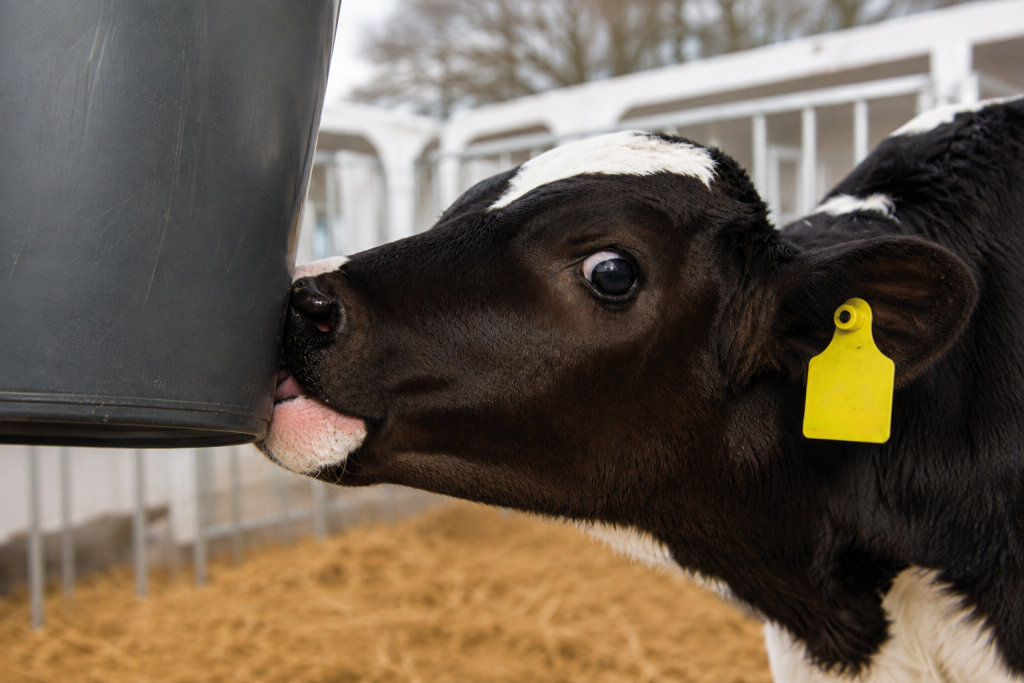
This makes the first 7–10 days a particularly valuable window in which excellent colostrum management, hygiene, consistent nutrition and appropriate nutritional gut-health support may help establish the foundations for healthier calves.
Prebiotic and postbiotic support
A prebiotic and postbiotic blend can support the neonatal calf gut through several complementary pathways. Fructo oligosaccharides (FOS), fermentation products derived from Aspergillus oryzae, or autolysed yeast can provide substrates (food) and microbial-derived compounds that may help promote a more favourable and diverse intestinal environment during the period when the gut microbiota is developing rapidly.
Inulin: Fuel for beneficial bacteria
Inulin is a naturally occurring, fermentable fibre commonly obtained from chicory root. It is not digested by the calf in the same way as milk nutrients; instead, it can be used by selected microorganisms in the lower gut. This selective fermentation is the basis of its prebiotic role.
By providing a substrate for beneficial bacterial groups, inulin may encourage the production of short-chain fatty acids, particularly compounds such as acetate, propionate and butyrate. These microbial fermentation products can contribute to intestinal health by providing energy to gut tissues, supporting normal gut-barrier function and helping to create conditions less favourable for some undesirable bacteria. In a young calf, this is especially relevant because the gastrointestinal ecosystem is still establishing itself and can be easily disrupted by nutritional change, environmental stress or exposure to enteric pathogens.
Aspergillus oryzae fermentation products: Supporting digestive adaptation
These materials are produced through controlled fermentation and may contain a range of bioactive fermentation metabolites, peptides, enzymes and other compounds. They are not simply intended to add another microbial species to the calf; rather, their value lies in helping to support the activity and balance of the beneficial microorganisms already colonising the digestive tract.
As calves begin to consume increasing quantities of starter feed, the developing rumen and lower gut become more metabolically active, and fermentation-derived ingredients may help support microbial activity and digestive adaptation. Responses can vary with calf age, diet, feeding system, and management, but these ingredients can be part of a wider nutritional strategy designed to encourage stable gut development.
Autolysed yeast: Barrier and immune support
Autolysed yeast contributes both prebiotic and postbiotic features. During autolysis, yeast cells break down and release cell-wall fractions and intracellular compounds, including beta-glucans, mannan-rich oligosaccharides, peptides, amino acids and nucleotides. Mannan-rich fractions may act as decoy binding sites for some bacteria, binding to the fimbrial lectins of Gram-negative pathogens such as E. coli and Salmonella, preventing their attachment to the intestinal mucosa and effectively flushing them from the gut potentially reducing the opportunity for them to attach to the intestinal lining.
Beta-glucans and other yeast components can interact with the calf’s innate immune system and may support an appropriate immune response at the gut surface. Because autolysed yeast is not dependent on living cells remaining viable, it can provide consistent microbial-derived components even where conditions are less favourable for live microbial survival.
A combined strategy for stronger gut resilience
Together, these substrates address different elements of early gut resilience. Inulin provides a selectively fermentable substrate for beneficial microorganisms; Aspergillus oryzae fermentation products provide metabolites and functional compounds that support microbial activity and digestive development; and autolysed yeast supplies prebiotic fractions alongside postbiotic cell components that can contribute to gut-barrier and immune support.
The intended outcome is not to eliminate neonatal diarrhoea or replace established calf-health measures, but to help establish a more stable and functionally diverse gastrointestinal environment. When combined with prompt, high-quality colostrum feeding, rigorous hygiene, consistent milk-feeding practice, clean water, starter provision and early recognition of sick calves, this kind of nutritional support may contribute to stronger gut resilience through the critical early weeks of life.
From gut-health research to on-farm application
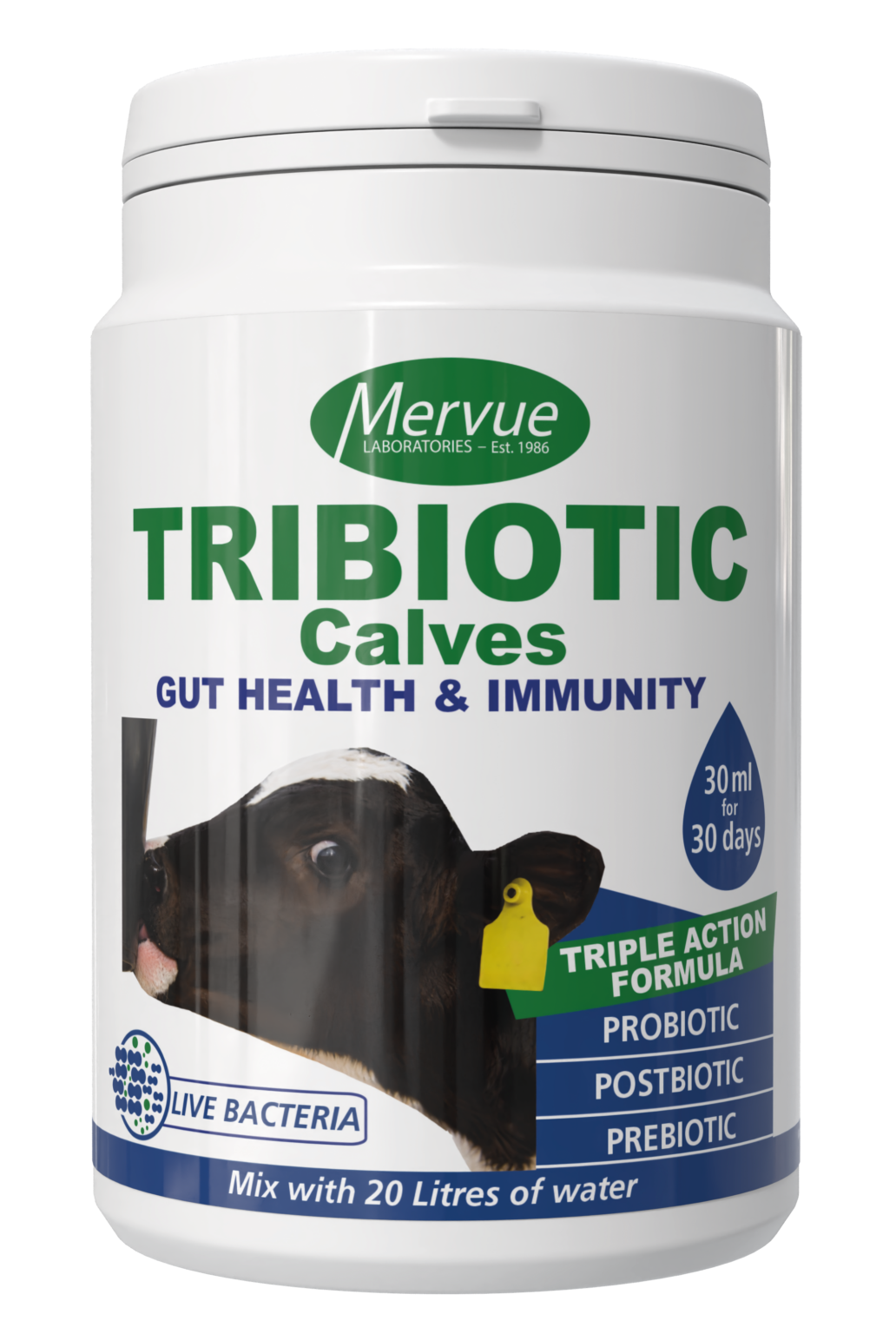
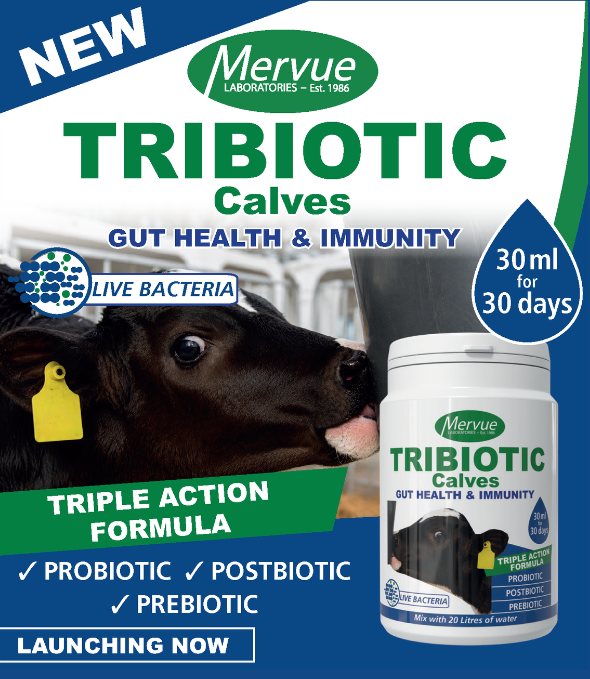
With 40 years of experience in supporting calf health through nutrition, Mervue Laboratories is launching Mervue Tribiotic, A soluble powder that can be added directly to milk, milk replacer, or mixed with water for application through automatic calf feeders.
Mervue Tribiotic combines prebiotics, probiotics, and postbiotics to support a healthier, more balanced gut ecosystem: it nourishes beneficial microbes, introduces live helpful bacteria, and provides beneficial microbial compounds that can support gut function and overall wellbeing.
Together, this complementary approach offers more complete microbiome support than any one component alone. Used together as part of a wider management plan – strong colostrum feeding, good hygiene, consistent milk feeding and clean water – this biotic approach offers a practical, preventive route to stronger, more resilient calves.
Find out more about Mervue Tribiotic
For further information, please contact, Mervue’s Veterinary Business Development Team:
Tel: +44 07743 914188
Email: sean@mervuelab.com
More about the author:
Des Cronin, BSc (Agri), MBA, Head of Animal Health and Nutrition, Inform Nutrition Ireland & Mervue Laboratories

Des Cronin, Head of Animal Health and Nutrition at Inform Nutrition Ireland and Mervue Laboratories, brings nearly 40 years’ feed industry experience across ruminants, equine, poultry and companion animals. He joined Inform Nutrition in 1997, becoming Head in 2020. He leads Mervue’s R &D programme and frequently speaks on nutrition topics industry-wide.
This article was originally posted in the Autumn edition of The Cube magazine. Click here to read – https://nvsgroup.turtl.co/story/the-cube-autum-2026-public-version/page/1
Related products