
by Carolina Cunha, Veterinarian, DVM, MSc, Product Executive, CF Pharma VET
Anal sac disease (ASD) is a condition that most veterinary professionals encounter regularly in practice. It is often managed quickly and routinely, yet for many animals it represents a source of significant discomfort and, in some cases, repeated clinical intervention. For owners, recurrent anal sac problems can be frustrating, while for clinicians, they often raise questions around long-term management and prevention.
In recent years, research has helped clarify that anal sac disease is rarely a simple, isolated problem. Instead, it reflects a combination of anatomical, gastrointestinal, dermatological and inflammatory factors. This broader understanding has shifted attention towards preventive and integrative approaches that go beyond repeated local treatment alone.
This article reviews current knowledge on the prevalence, presentation and management of anal sac disease in dogs and cats, with a particular focus on prevention, animal welfare and the role of gastrointestinal health.
Prevalence and epidemiology
Anal sac disease is a common finding in first-opinion practice. Data from the UK VetCompass programme, led by the Royal Veterinary College, show that non-neoplastic anal sac disorders affect around 4–5% of dogs under primary veterinary care each year¹. In practical terms, this means that approximately one in every 20–25 dogs seen annually will present with an anal sac problem.
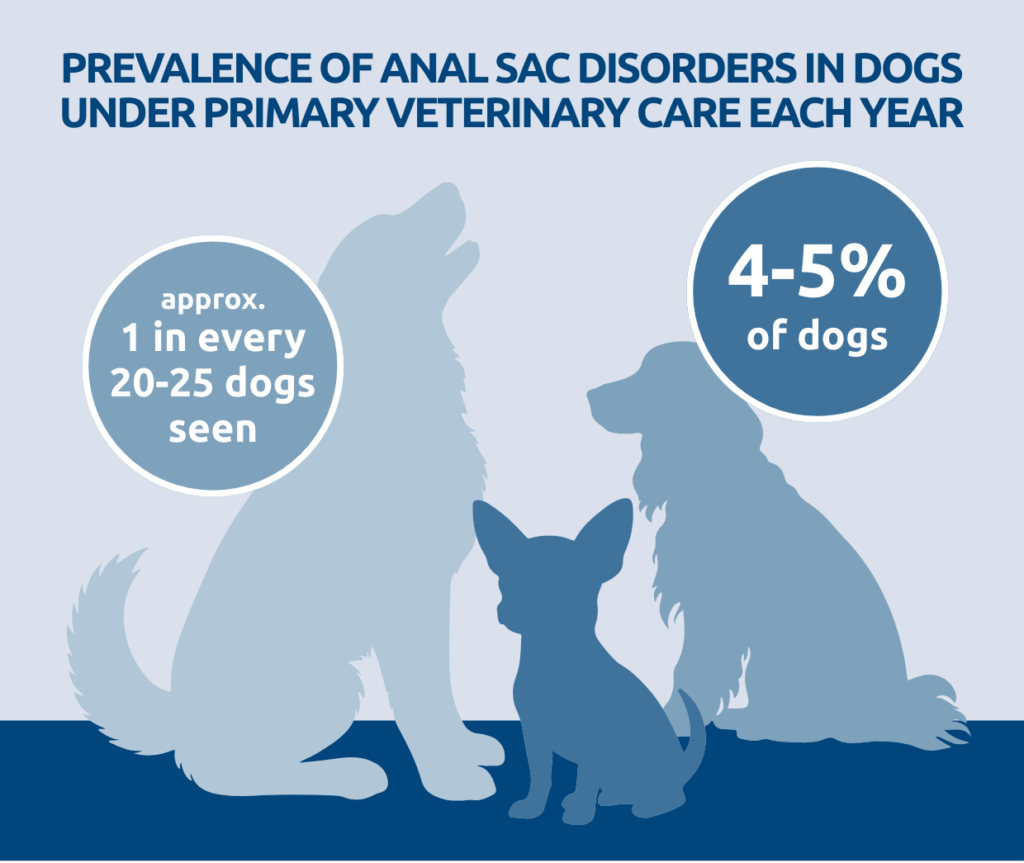
Earlier population studies reached similar conclusions, ranking anal sac disease among the most frequently diagnosed conditions in UK dogs². In a cross-sectional study, up to 15% of dogs were reported to have experienced anal sac issues at some point in their lives³, reflecting the recurrent and intermittent nature of the condition.
In cats, anal sac disease is diagnosed less often. Feline patients tend to show more subtle signs, and owners may not notice scooting or perianal discomfort as readily. As a result, diagnosis is often delayed, and prevalence is probably underestimated⁴.
Types of anal sac disorders
Rather than a single condition, anal sac disease includes a range of related disorders. The most common presentation in dogs is anal sac impaction, where thickened secretions are not emptied effectively. Over time, this can lead to anal sacculitis, with inflammation and pain on palpation.
If inflammation persists, secondary infection or abscessation may develop, causing marked discomfort and, in some cases, rupture and draining tracts. Although uncommon, anal sac adenocarcinoma remains an important differential diagnosis, particularly in chronic, unilateral or atypical cases⁵.
Dogs are more commonly affected by impaction and infection, while cats often present later in the disease process. This difference highlights the importance of careful assessment in both species.
Clinical signs and impact on welfare
Typical signs of anal sac disease include scooting, excessive licking of the perianal area, unpleasant odour, discomfort when sitting and pain during defecation. In some animals, behavioural changes such as irritability or restlessness may be the main indicators of discomfort.
Anal sac disease should not be dismissed as a minor issue. Inflammatory and infected cases are painful, and repeated episodes can significantly affect quality of life. For owners, recurrent problems often lead to dissatisfaction with treatment outcomes. Studies have shown that ongoing anal sac disease negatively influences owner perception of success and overall satisfaction with veterinary care³.
Risk factors and why disease recurs
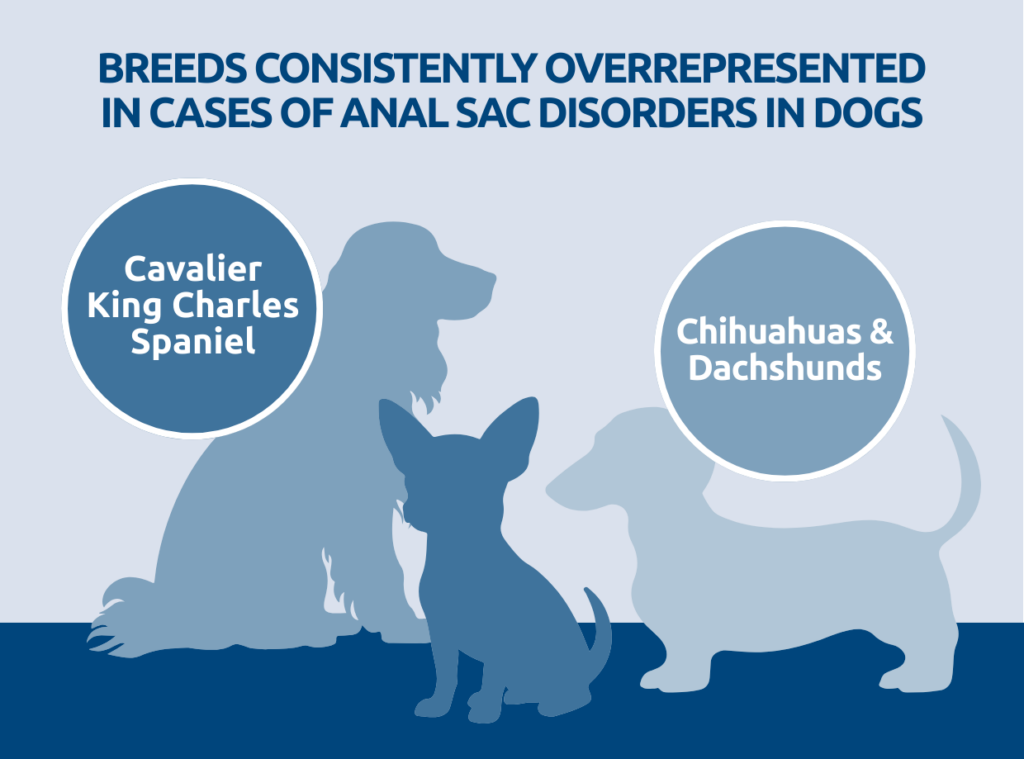
Anal sac disease is best understood as a multifactorial problem, with several factors increasing the likelihood of development and recurrence. Breed and conformation play an important role. Small and brachycephalic breeds, including Chihuahuas, Dachshunds and Cavalier King Charles Spaniels, are consistently overrepresented¹. Anatomical differences may reduce the efficiency of normal anal sac emptying.
Body condition is another key factor. Overweight animals may have reduced muscle tone and altered defecation mechanics, while lower activity levels can further compromise physiological emptying.
Gastrointestinal health is central to anal sac function. Effective emptying depends on firm, well-formed stools that provide sufficient mechanical pressure during defecation. Chronic soft stools or intermittent diarrhoea significantly increase the risk of retention and inflammation.
Dermatological disease, particularly atopic dermatitis, is frequently associated with recurrent anal sac problems. Increasing evidence suggests shared inflammatory mechanisms and links between skin health, gut health and anal sac disease⁶.
Diagnosis and the emerging role of imaging
In most cases, diagnosis is straightforward and based on history, clinical signs and rectal examination. This remains sufficient for the majority of primary care presentations. However, recurrent, unilateral or atypical cases may require further investigation.
Recent studies have explored the use of ultrasonography to assess anal sac morphology. Ultrasonographic evaluation of normal anal sacs in dogs and cats has been shown to be reliable⁷, suggesting potential value in identifying early or subclinical changes. While not yet routine, imaging may become a useful adjunct in selected cases.
Current management in practice
Management depends on the severity and frequency of disease. Initial treatment usually involves manual expression of the anal sacs, with flushing performed when secretions are particularly thick.
In cases of inflammation or infection, topical intra-sac treatments may be combined with analgesia and anti-inflammatory therapy. Systemic antibiotics are often prescribed in painful or infected cases. UK data indicate that antimicrobials are used in around 20% of anal sac cases¹, underlining the importance of addressing underlying causes to reduce repeated antibiotic exposure.
In dogs with frequent or severe recurrence, surgical options such as anal sacculectomy may be considered. These procedures are generally reserved for refractory cases due to the potential for complications.
New perspectives: The anal sac microbiome
Recent research has challenged the traditional view of anal sac disease as a condition that is purely mechanical in nature. Studies have demonstrated the presence of distinct microbial populations within anal sac secretions, along with clear differences between healthy and diseased animals.
In dogs, altered anal sac microbiota and increased inflammatory cytokines have been identified in atopic individuals compared with healthy controls⁶.
In cats, detailed characterisation of anal gland microbiota and volatile compounds has provided further insight into species-specific differences⁸. Together, these findings support a more integrated view of anal sac disease involving interactions between the gut, skin and immune system.
Prevention: Thinking beyond repeated expression
Given how often anal sac disease recurs, prevention deserves greater emphasis. Repeated manual expression alone does not address underlying risk factors and may contribute to ongoing irritation in some animals.
Preventive strategies should focus on maintaining good stool quality, as well-formed stools support natural anal sac emptying. Weight management, regular exercise and effective control of dermatological disease are also important components of long-term management, particularly in predisposed animals.
Nutritional support and gastrointestinal health
Nutritional approaches are increasingly used to support prevention and long-term management. Dietary fibre plays a key role in stool formation, with insoluble fibre increasing bulk and soluble fibre helping regulate water content and fermentation.
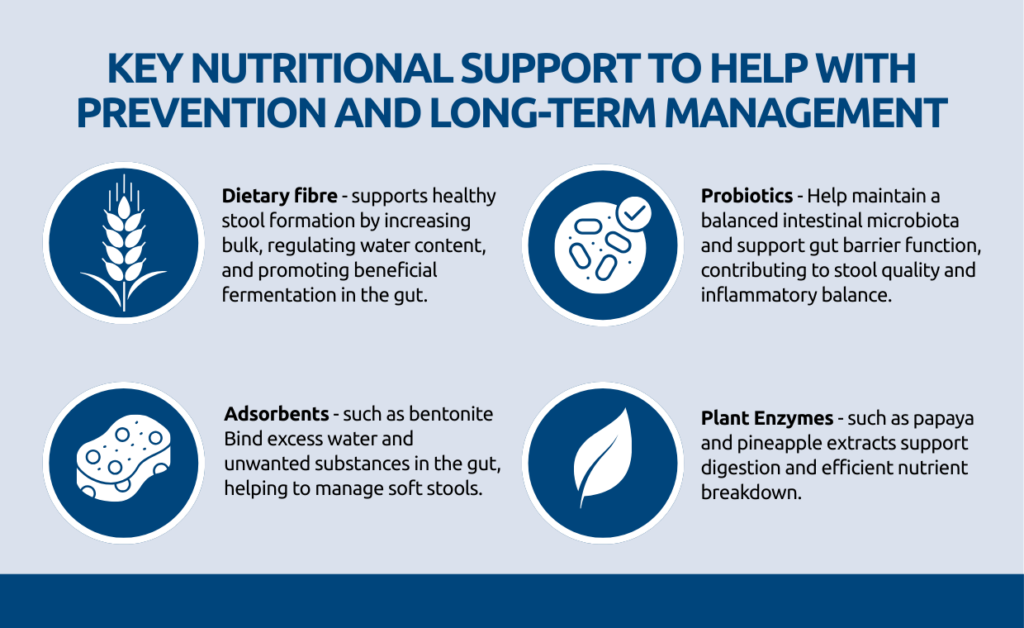
Probiotics may support intestinal microbiota stability and gut barrier function, indirectly influencing stool quality and inflammatory balance. Adsorbents such as bentonite can be helpful in managing soft stools when used appropriately, while plant-derived enzymes, including papaya and pineapple extracts, are commonly included as digestive aids.
A fibre-rich supplement evaluated by Ehrenzweig demonstrated clinical benefit in dogs with recurrent anal sac disease, supporting the practical relevance of nutritional strategies⁹.
Linking gut health and anal sac function
Physiological emptying of the anal sacs relies on adequate mechanical pressure during defecation. When stools are persistently soft, this mechanism is compromised, increasing the likelihood of retention and inflammation.
Supporting gastrointestinal health and consistent stool quality, therefore, represents a logical and practical way to reduce recurrence in predisposed animals.
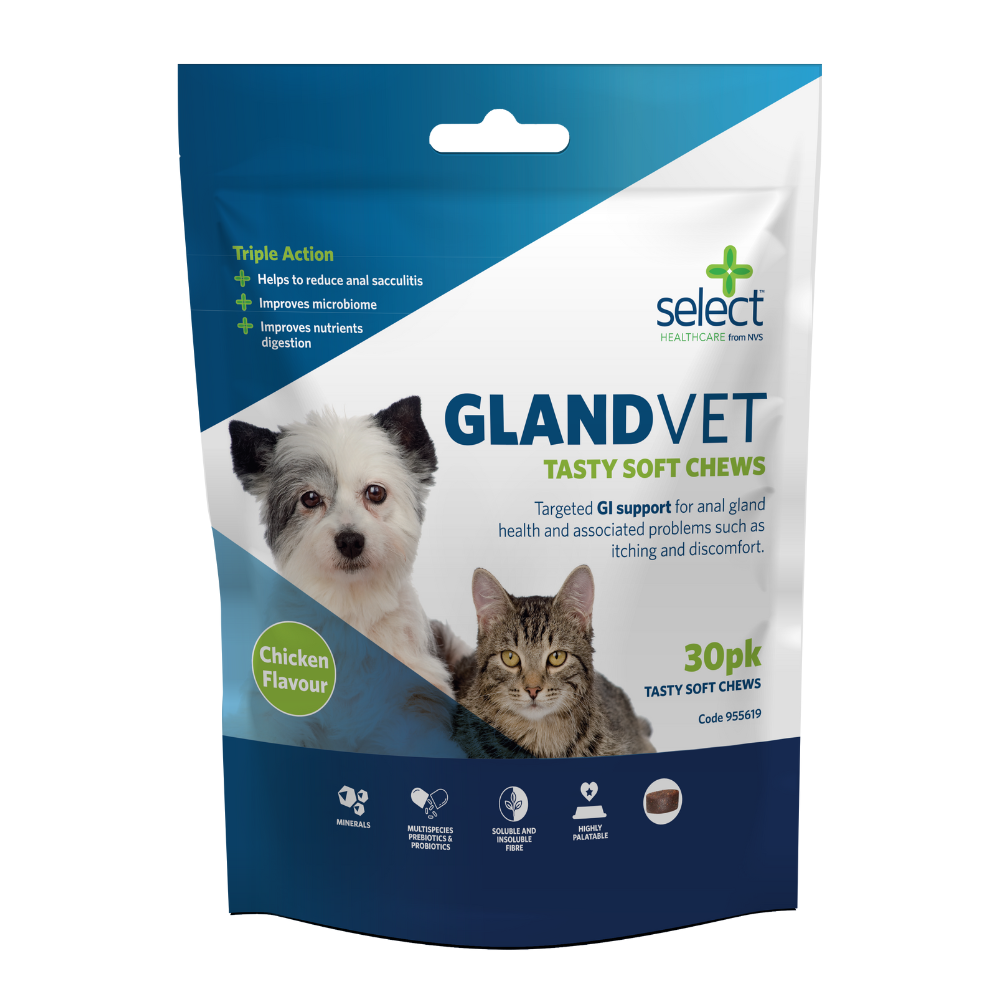
GlandVet: A nutritional support option
GlandVet is a complementary nutritional 8 g chew formulated to support gastrointestinal health in dogs predisposed to anal sac problems. Its composition includes soluble and insoluble fibre to promote stool consistency, probiotics to support intestinal microbiota balance, bentonite as an adsorbent for soft stools, and papaya and pineapple extracts to provide digestive enzyme support.
GlandVet is intended for use as part of a preventive strategy alongside appropriate diet, weight management and veterinary oversight. It is not a substitute for clinical treatment in painful or complicated cases, where veterinary intervention remains essential.
Conclusion
Anal sac disease is a common and often uncomfortable condition with clear implications for animal welfare, recurrence and antimicrobial use. While local treatment remains essential in acute cases, long-term management benefits from a broader, more preventive approach.
Addressing gastrointestinal health, stool quality and recognised risk factors can help reduce recurrence, support responsible antimicrobial use and improve quality of life. Nutritional supplements such as GlandVet can be valuable tools in this preventive strategy, particularly for animals with a history of recurrent anal sac disease or known risk factors.
More about the author:
Carolina Cunha, Veterinarian, DVM, MSc, Product Executive, CF Pharma VET

Carolina is a veterinarian with over eight years’ experience in companion and large animal practice, including as a managing partner. Now working in the animal health industry, she brings clinical insight to product development and communication. She understands the importance of shaping products that are relevant to the market, supporting veterinarians in promoting health and improving the lives of companion animals.
Her strong interest in the microbiome enriches the technical and commercial aspects of her work, guiding evidence-based formulation, identifying emerging health trends and supporting strategic product positioning and business development.
The article was originally posted in The Cube magazine, February 2026 issue. Click here to read the magazine.
Related products