A senior equine vet has expressed hope that this year’s equine influenza outbreak will change attitudes toward vaccination among horse owners.
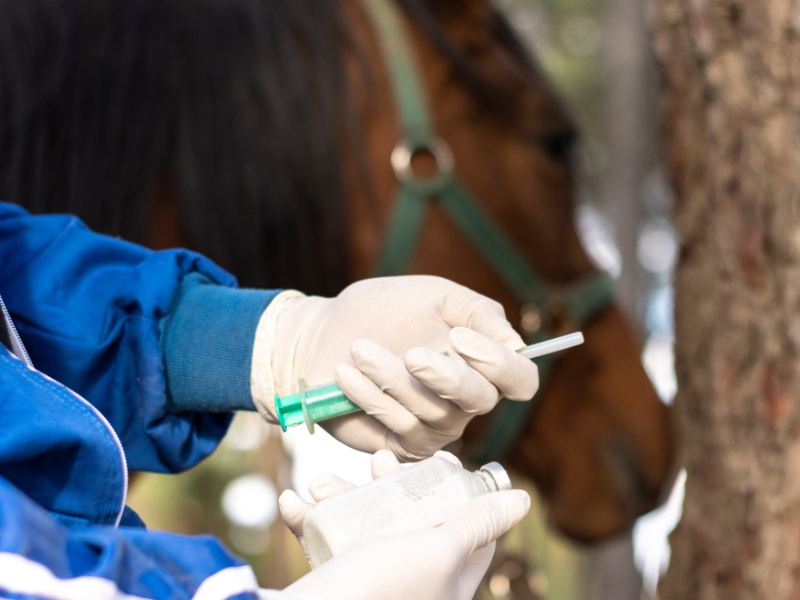
James Given, the British Horseracing Authority’s (BHA) director of equine regulation, safety and welfare, said the regulator was urging “vets to encourage bigger drives on getting horses vaccinated” and noted that while a “six-month vaccination cycle was not popular with many trainers… it worked”.
He added: “I hope the experience of this year might change their attitude towards that. One has to always remember that one vaccination costs less than a set of shoes, generally. We’re not asking for the world, here.”
Lab-confirmed outbreaks
Equine Infectious Disease Surveillance (EIDS) has recorded 136 laboratory-confirmed outbreaks across 57 UK counties since April, with a further 46 confirmed outbreaks for which reporting permission had not been granted. This compares to four cases nationwide last year.
However, only two of the lab-confirmed outbreaks occurred between 9 July and EIDS’ latest update on 20 August.
Mr Given argued “we’re way off” herd immunity levels in the UK and that increased vaccination of domesticated horses would help protect the wild population. He added: “Other people’s behaviour choices will affect the welfare of those horses.”
Temporary restrictions
The BHA lifted temporary restrictions placed on horses entering racecourse property from non-licensed training yards following the reduction in equine flu levels.
Going forward, Mr Given said it would engage with other equestrian disciplines to exchange information and intelligence.
He concluded: “It’s no good to us if other disciplines have a nightmare. That means other horses’ welfare has been compromised and, as a vet, what we always try to work towards is any welfare issue for any horse.”
Congress stream
Mr Given is due to speak at BEVA Congress tomorrow (11 September). Congress features a session on respiratory diseases and a wider stream on emerging disease threats and surveillance.
BEVA said equine flu “remains a significant threat to equine health and welfare” and called for “vaccination, sensible biosecurity, vigilance and effective disease surveillance” following the outbreak.
According to EIDS’ data, 87 of the 136 lab-confirmed outbreaks (63%) involved unvaccinated horses, either exclusively or in mixed groups, and 83 (61%) involved horses with a travel history.
‘Reassuring’
BEVA veterinary projects officer, Lucy Grieve, said: “It is reassuring reported case numbers appear to have stabilised, but this outbreak demonstrates just how quickly equine influenza can spread when susceptible horses move between premises and events.
“Vaccination is one of the most effective tools we have to reduce the risk of disease and limit onward transmission. BEVA encourages owners to review their horses’ vaccination status, maintain good biosecurity, monitor for respiratory signs and seek veterinary advice promptly if concerns arise.
“Continued surveillance and reporting are also vital to help us understand how disease is spreading and identify areas of ongoing risk.”
Credit to: Vet issues equine flu vaccination plea (Vet Times)
Vet Times. (2026). Vet issues equine flu vaccination plea [online]
Available at: https://www.vettimes.com/news/vets/equine/vet-issues-equine-flu-vaccination-plea