
by Lucy Williams, BVSc, MRCVS, Marketing Manager, Carus Animal Health

Investigation of gastrointestinal (GI) inflammation in dogs and cats can be diagnostically challenging. While a comprehensive history and thorough clinical examination are essential, definitive diagnosis of inflammatory enteropathy and other causes of intestinal inflammation relies on histology, with tissue samples obtained by endoscopy or surgical biopsy.
These procedures provide valuable information but require anaesthesia, can be costly and carry associated risks – for example, complication rates following incisional full-thickness small intestinal biopsies are around 12 percent.1 As a result, owners may be reluctant to pursue invasive diagnostics.
There is now a growing body of evidence that supports the use of faecal calprotectin as a non-invasive biomarker that can assist in the diagnosis and monitoring of canine and feline inflammatory enteropathies.
What is faecal calprotectin?
Faecal calprotectin is a sensitive biomarker of gastrointestinal inflammation.2-4 During gastrointestinal inflammation, the innate and adaptive immune responses are stimulated, resulting in an influx of phagocytic cells and the release of inflammatory cytokines. These chemoattract neutrophils, triggering a cascade of events leading to neutrophil disintegration (Figure 1).2,4,5
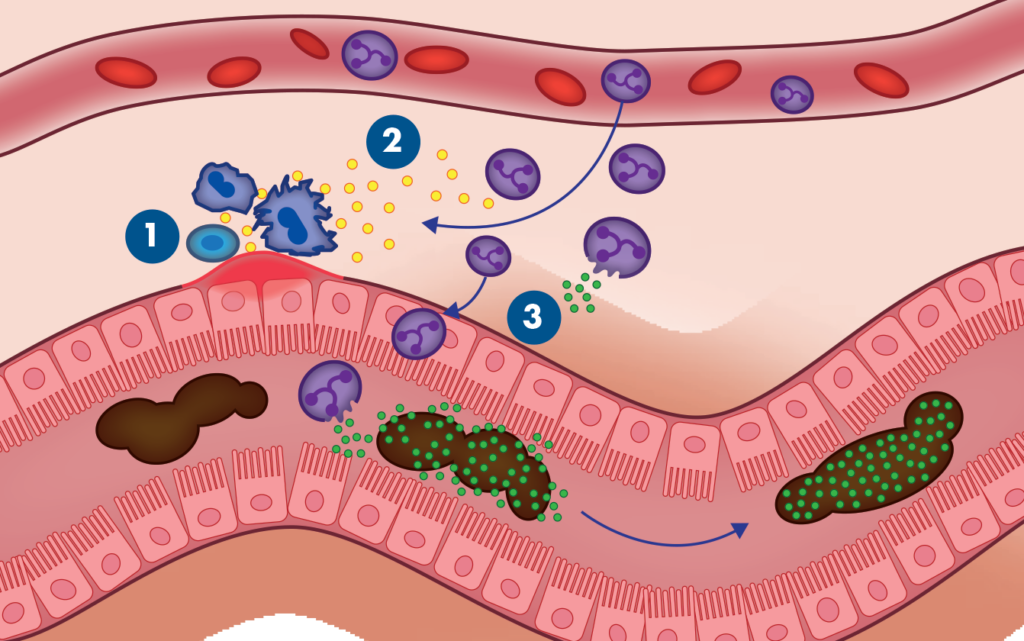
Figure 1. Mechanism of faecal calprotectin release during gastrointestinal inflammation. 1. Immune responses are stimulated. 2. Release of inflammatory cytokines. 3. Neutrophil disintegration results in calprotectin release into the gut lumen. (Click image to zoom in)
Calprotectin makes up around 60 percent of the neutrophil’s cytosol (fluid within a cell’s cytoplasm). Neutrophil disintegration therefore results in calprotectin being released into the gut lumen, where it enters the faecal stream, and can then be measured.2,4
Importantly, calprotectin is resistant to degradation by faecal bacteria and its concentration in faeces therefore correlates with the degree of neutrophilic infiltration in the gastrointestinal mucosa.
Did you know? Faecal calprotectin is included in NICE guidelines for IBD management in people.
Point of care testing with GIQuest
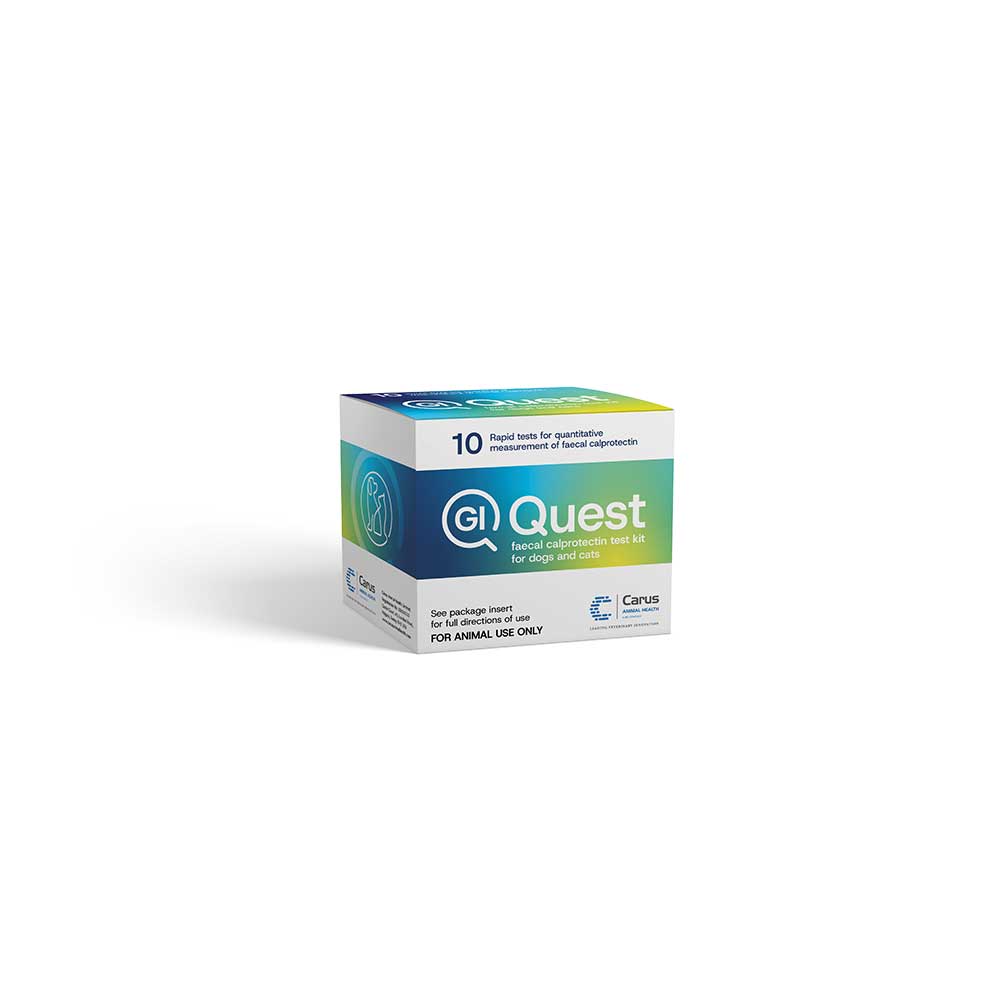
GIQuest is a patient-side lateral flow faecal calprotectin test, helping to guide next steps in dogs and cats with chronic GI conditions, including chronic enteropathy (CE; previously termed inflammatory bowel disease or IBD), food-responsive enteropathy (FRE) and GI side effects associated with oral non-steroidal anti-inflammatory drug (NSAID) use (Table 1).
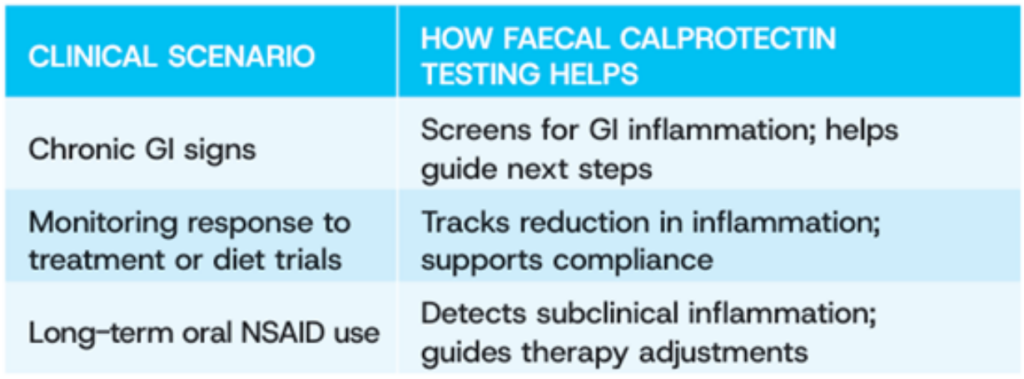
Table 1. Faecal calprotectin use in different clinical scenarios
1. Faecal calprotectin in canine chronic enteropathy
Canine chronic enteropathy (CE) refers to a group of chronic, relapsing inflammatory disorders of the gastrointestinal tract.6 CE can affect the small intestine, large intestine, or both and can significantly reduce quality of life. Clinical signs vary but commonly include vomiting, diarrhoea, weight loss, flatulence, melaena and alterations in appetite.
A definitive diagnosis requires a thorough diagnostic investigation, including the exclusion of other causes of chronic GI disease. The measurement of faecal calprotectin can form part of this diagnostic process.
GIQuest validation study
In a University of Bristol validation study using GIQuest, a point of care faecal calprotectin lateral flow test, faecal calprotectin levels showed a clear distinction between dogs with histologically confirmed inflammatory enteropathy and healthy controls (Figure 2). The study identified a diagnostic threshold of 3 mg/kg, above which results were considered consistent with inflammatory enteropathy. At this threshold, the test demonstrated 96% specificity and 94% sensitivity.7
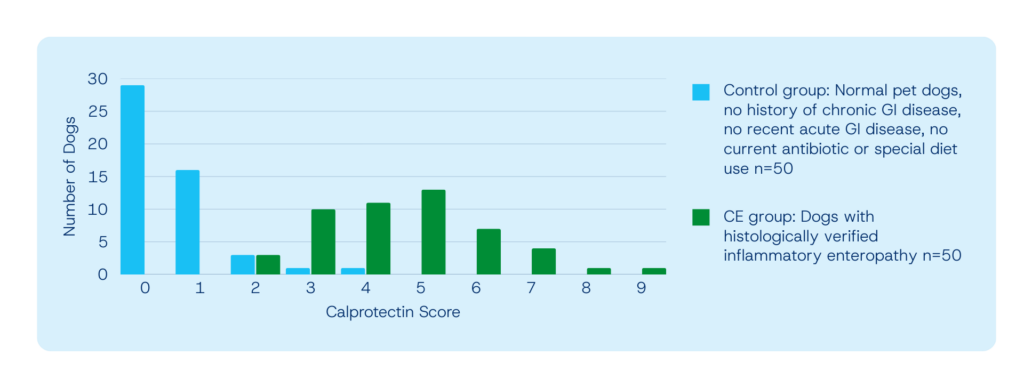
Figure 2. Distribution of faecal calprotectin scores in histologically verified inflammatory enteropathy vs controls
While faecal calprotectin does not replace histopathology, it may help refine the diagnostic pathway and inform timely, evidence-based decisions. It can also provide clinicians and owners with a clearer understanding of what is driving GI signs, supporting shared decision-making throughout the diagnostic and treatment process.
2. Faecal calprotectin in feline chronic enteropathy
Feline chronic enteropathy (FCE) encompasses GI disorders including idiopathic inflammatory bowel disease and food-responsive enteropathy.8 Given that many cats with chronic enteropathy present with subtle, slowly progressive signs – and that owners may decline invasive procedures – faecal calprotectin offers a practical and feline-friendly diagnostic option.
In the University of Bristol study, faecal calprotectin concentrations showed a clear distinction between 50 cats with confirmed chronic enteropathy and 50 clinically healthy controls (Figure 3).
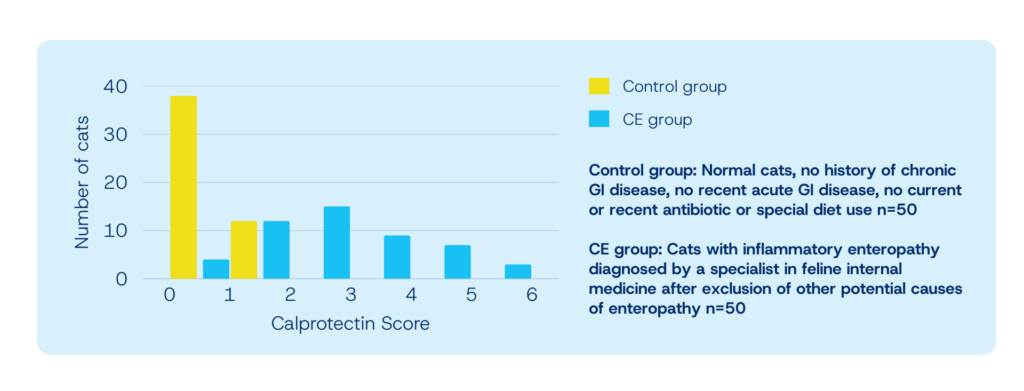
Figure 3. Distribution of faecal calprotectin scores in diagnosed feline inflammatory enteropathies vs controls. (Click on image to zoom in)*
The study identified a diagnostic threshold of 2.5 mg/kg, above which results were considered consistent with inflammatory enteropathy. At this threshold, the test demonstrated 100% specificity and 92% sensitivity.
Chronic enteropathy key guidance
- Elevated faecal calprotectin supports further investigation and/or the start of treatment or dietary trials
- Normal or borderline results may reduce the urgency for more invasive tests, especially in stable patients or where there are financial or practical concerns
- If biopsy is declined, faecal calprotectin can help justify treatment decisions
- Repeat testing can be used to monitor response to therapy or detect early relapse
3. Faecal calprotectin in food responsive enteropathy
Food responsive enteropathy (FRE) is a form of chronic enteropathy characterised by a marked improvement or complete resolution of clinical signs after starting an elimination diet trial with a novel, single protein or hydrolysed diet. Diagnosis is often based on response to a diet trial, alongside exclusion of other causes.
As well as supporting diagnosis, faecal calprotectin offers a useful way to monitor response to dietary therapy. In the Bristol University study, 20 dogs with FRE were evaluated before and after a three month diet trial (Figure 4).
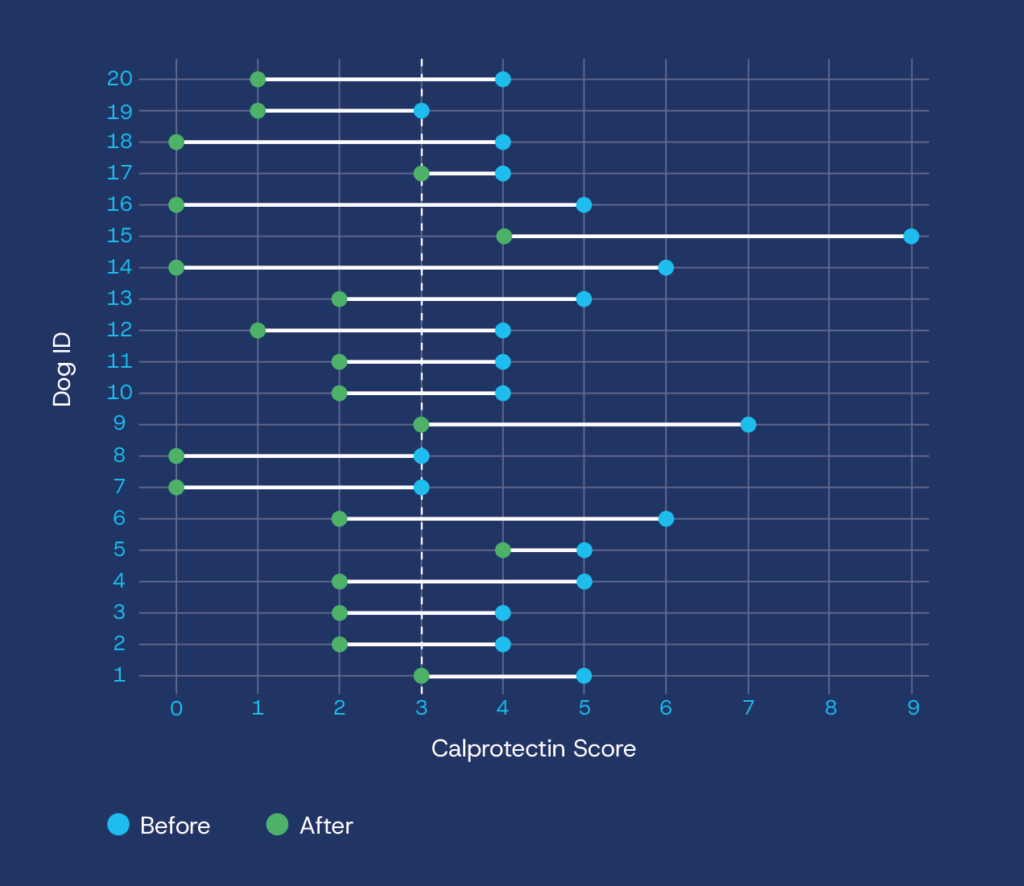
Figure 4. Faecal calprotectin scores before and after diet trial, showing individual dog responses.
All dogs had calprotectin levels in the inflammatory range (≥3 mg/kg) prior to diet trial (mean pre-treatment score: 4.7). Following dietary management, all dogs had reduced levels of calprotectin and 75% had calprotectin levels that returned to the normal or borderline range (mean post-treatment score: 1.7).
Clarity and compliance
One advantage of faecal calprotectin is its ability to clearly demonstrate a reduction in intestinal inflammation even before clinical signs have fully improved. This objective reassurance is often key to maintaining owner commitment to a strict elimination diet during the early weeks, when improvement may appear slow or inconsistent.
What about CAFR?
GIQuest has not yet been tested in cases of cutaneous adverse food reactions (CAFR); however, future studies are planned to evaluate its potential for assessing the level of gastrointestinal inflammation in this condition and whether it can help differentiate it from primary dermatological disease.
FRE key guidance
- Faecal calprotectin testing may help identify cases that would benefit from a diet trial
- Repeat testing post-diet can help confirm response and support long-term management
- Early reduction in faecal calprotectin helps support owner compliance during diet trials
4. Faecal calprotectin for monitoring NSAID-associated inflammation
As well as the diagnosis and monitoring of primary GI disease, faecal calprotectin can be used to monitor GI inflammation associated with the use of oral non-steroidal anti-inflammatory drugs (NSAIDs). NSAIDs are highly effective at reducing pain and inflammation, and for senior dogs in particular, they play a vital role in maintaining mobility and improving quality of life. While most dogs tolerate NSAIDs well, the potential for adverse effects should not be overlooked.
Subclinical GI lesions in dogs receiving long-term oral NSAIDs are common. In one study of dogs receiving NSAIDs for a median of six months, more than 80% were found to have mucosal erosions when assessed via video capsule endoscopy.9 Because routine endoscopic monitoring is impractical for most NSAID-treated dogs, faecal calprotectin provides an accessible, repeatable method of detecting mucosal injury at an early stage.
Screening for GI inflammation
The clinical utility of faecal calprotectin in screening for GI inflammation was evaluated in the University of Bristol study. Dogs receiving oral NSAIDs for two weeks showed a significant rise in faecal calprotectin concentrations, with mean values increasing from 0.45 mg/kg to 1.5 mg/kg. In 25% of dogs, faecal calprotectin levels met or exceeded the threshold of 3 mg/kg, consistent with inflammatory enteropathy, despite the absence of clinical signs (Figure 5). This points to the test’s ability to detect NSAID-induced gastrointestinal adverse effects, that might otherwise go unnoticed.
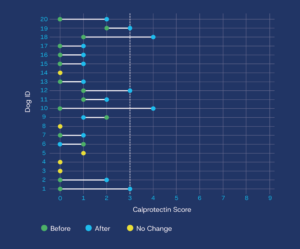
Figure 5. Changes in faecal calprotectin score before and after treatment with a NSAID for two weeks. The threshold for inflammatory enteropathy is a calprotectin score of 3 (equivalent to 3mg/kg).
NSAID monitoring key guidance
- Consider baseline testing before starting NSAIDs
- In dogs on NSAIDs, elevated faecal calprotectin may guide:
- The need for gastroprotectants
- Decisions around altering or discontinuing treatment
- Increases in faecal calprotectin may help identify subclinical inflammation
Contextualised care in practice
Faecal calprotectin is particularly useful in first-opinion practice, where pragmatic, rapid decision-making is required (Table 2). GIQuest provides point-of-care, cost-effective data to support clearer communication and shared decision-making. It does not replace imaging or biopsy but helps determine when further diagnostics may be indicated.
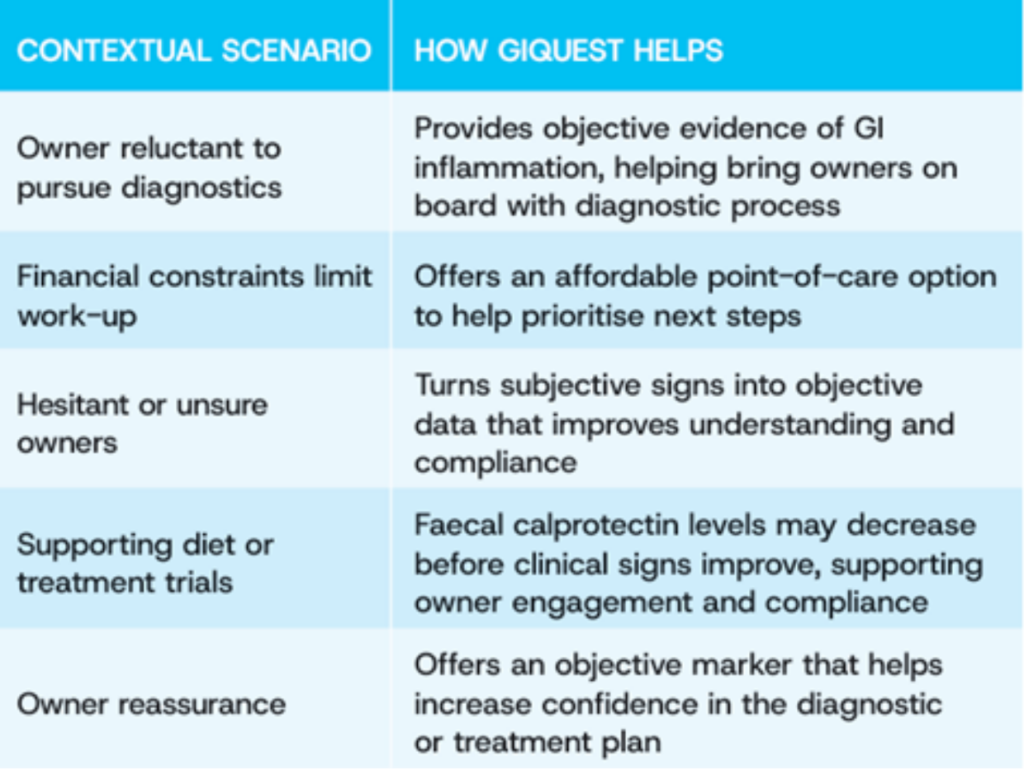
Table 2. Faecal calprotectin use in contextual scenarios.
About GIQuest
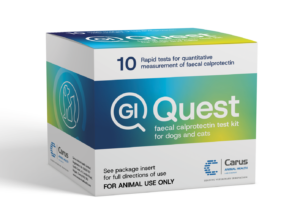
The first of its kind, GIQuest provides fast, non-invasive and reliable results.
- Clinically validated
- High specificity and sensitivity
- Cost-effective
- Results in just 15 minutes
- Easy to perform
- Aids clinical workflow
More about the author:
Lucy Williams, BVSc, MRCVS, Marketing Manager, Carus Animal Health

Lucy Williams, BVSc, MRCVS is marketing manager with a background of over 5 years in general practice and a keen interest in internal medicine and gastrointestinal health. She specialises in science-driven and creative strategy within the veterinary marketing space. Outside of work, she enjoys being outdoors, especially by the beach and spending time with friends.
The article was originally posted in The Cube magazine, February 2026 issue. Click here to read the magazine.
Related products