by Emma Ofosu, Technical Product Manager, VetIT.
The veterinary profession is entering a period of significant change as practices prepare for the implementation of the Competition and Markets Authority (CMA) remedies. While much of the discussion has understandably focused on compliance, many practices are beginning to ask a more practical question:
How do we implement these changes without creating additional administration for already busy teams?
The answer is likely to lie in a combination of process, communication and technology.
Moving beyond compliance
The CMA recommendations are designed to improve transparency and help veterinary practice clients make informed decisions about their animal’s care. For practices, however, implementing these requirements will often involve changes to established workflows around estimates, prescriptions, communication and record-keeping.
The challenge isn’t simply meeting the requirements. It’s doing so in a way that remains practical, efficient and sustainable for practice teams. The most successful practices are likely to be those that embed compliance naturally into the day-to-day running of the practice, rather than treating it as a separate administrative exercise.
Why practice management systems matter
Practice management systems have evolved significantly in recent years. Historically, a PMS was primarily responsible for appointments, patient records and billing. Today, practices increasingly need their systems to support transparency, client communication, workflow efficiency and regulatory requirements alongside their traditional functions.
The days of a PMS acting purely as a record-keeping platform are rapidly disappearing”
Whether it’s generating estimates, managing prescriptions, maintaining audit trails or improving communication with clients, technology now plays a critical role in helping practices adapt to a changing regulatory landscape.
Supporting compliance through workflow design
At VetIT, our focus has been on helping practices integrate CMA requirements into everyday workflows, rather than creating additional administration. Development work is currently underway across several areas of the platform, including:
- Estimates and pricing transparency
- Prescription management
- Client communications
- Workflow automation
- Reporting and audit trails
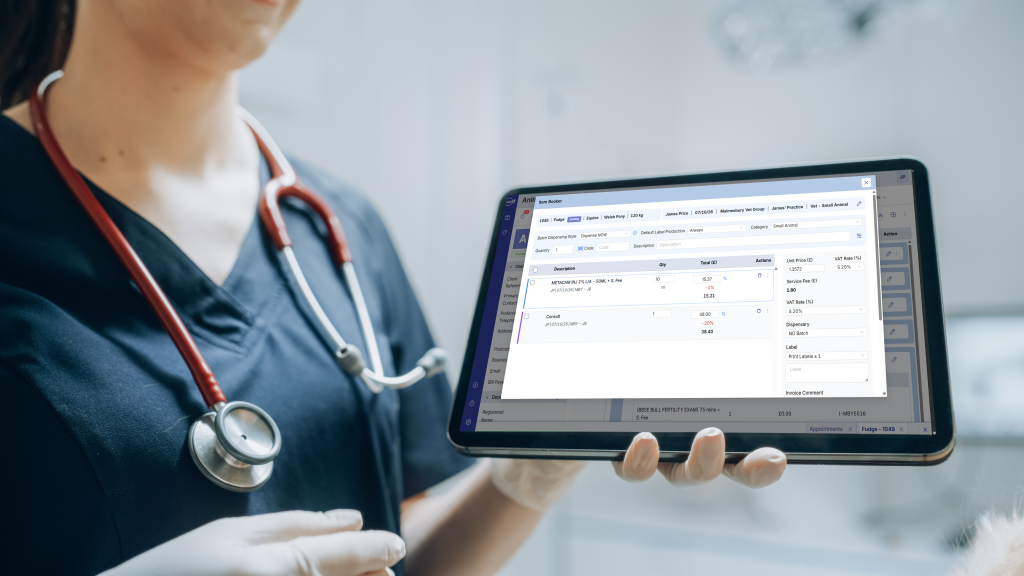
One area of particular focus is the continued development of the Booker module. Our vision is for Booker to bring bookings, estimates and prescriptions together into a more connected workflow, helping practices manage these activities more efficiently whilst maintaining clear communication with clients.
Future developments will also allow practices to progress directly from accepted estimates into bookings, whilst supporting the additional transparency requirements practices are expected to demonstrate.
Similarly, prescription management functionality continues to evolve, supporting efficient charging, prescription generation, client communication and digital workflows that help practices maintain compliance without creating unnecessary manual processes.
Our aim is simple: help practices meet their obligations whilst keeping the focus on patient care and client service.

Practice first. AI in support.
At the same time, advances in artificial intelligence are creating new opportunities for veterinary practices. Whilst AI often dominates headlines, the greatest benefits are likely to come from practical applications that support existing teams and workflows.
For example, AI-assisted consultation transcription can help reduce repetitive administration and speed up clinical note creation, allowing clinicians to spend more time focusing on patients and clients.
Used correctly, AI should support veterinary professionals rather than replace them. It’s a philosophy we describe as: Practice First. AI in Support. Technology should simplify veterinary practice, not complicate it.
Looking ahead
The CMA remedies represent an important moment for the profession, but they also provide an opportunity to review how practices operate and where improvements can be made. For practice owners and managers, the challenge is not simply achieving compliance. It is building workflows that support transparency whilst remaining practical for busy teams.
Technology alone will not solve every challenge, but when combined with good processes and clear communication, it can help practices improve efficiency, strengthen client relationships and reduce administrative burden. The practices that embrace both regulatory change and technological innovation are likely to be best placed for the future. At VetIT, that’s exactly what we’re working towards.
Built on a completely new technology foundation, the next generation of VetIT combines deep veterinary functionality with a more modern, flexible and future-ready experience.
More about the author:
Emma Ofosu, Technical Product Manager, VetIT

Emma Ofosu is a Technical Product Manager at VetIT and has been part of the business since its earliest days. With over two decades of experience in veterinary software development, she has played a key role in the development of the next generation of the VetIT Practice Management System, helping to build a more modern, flexible and future-ready platform for veterinary practices. Emma is passionate about using technology to solve the day-to-day challenges veterinary professionals face and ensure VetIT software continues to evolve alongside the profession’s needs.
This article was originally posted in the Autumn edition of The Cube magazine. Click here to read – https://nvsgroup.turtl.co/story/the-cube-autum-2026-public-version/page/1