By Safe4 – The Professional Solution
Keeping sheep is a rewarding pastime, but it also comes with some health risks that don’t always get talked about, especially zoonoses. These are diseases that can pass from animals to humans, and they are more common than many people realise. The good news is that most of these risks can be managed with straightforward hygiene habits and good disinfection practices. Understanding what you are dealing with is the first step.
The most common zoonotic diseases in sheep
Q Fever Caused by the bacterium Coxiella burnetii, Q fever is one of the most significant zoonotic risks on sheep farms. It spreads through contact with infected birth materials, urine, faeces and wool. Lambing season carries the highest risk. Symptoms in people range from flu-like illness to more serious complications affecting the heart and liver. Some people carry it without ever showing symptoms.
Cryptosporidiosis Cryptosporidium is a gut parasite that causes severe diarrhoea in both lambs and people. It is highly contagious and can survive in the environment for months. Young lambs with scouring are a particular risk, and even brief contact with infected animals or contaminated surfaces can be enough to cause illness.
E coli O157 Sheep can carry E. coliO157 without showing any signs of illness at all. For people, particularly children and the elderly, infection can cause serious kidney complications. It spreads via contaminated faeces, soil, water and hands. Farms that welcome visitors during lambing season need to be especially vigilant.
Orf Orf is a viral skin infection that passes readily from sheep to people through broken skin or scratches. It causes painful sores, usually on the hands, and while it generally resolves on its own, it can be severe in people with weakened immune systems. Wearing gloves when handling affected animals is the most effective prevention.
Chlamydiosis (Enzootic Abortion) Chlamydia abortus causes abortion in ewes and poses a serious risk to pregnant women, potentially causing miscarriage or stillbirth. Pregnant women should avoid all contact with sheep during lambing season and should not assist with births or handle newborn lambs or afterbirths.
Leptospirosis Spread through urine, particularly in wet conditions, leptospirosis can cause flu-like illness and, in severe cases, organ failure. Cuts and grazes on the skin are a common entry point.
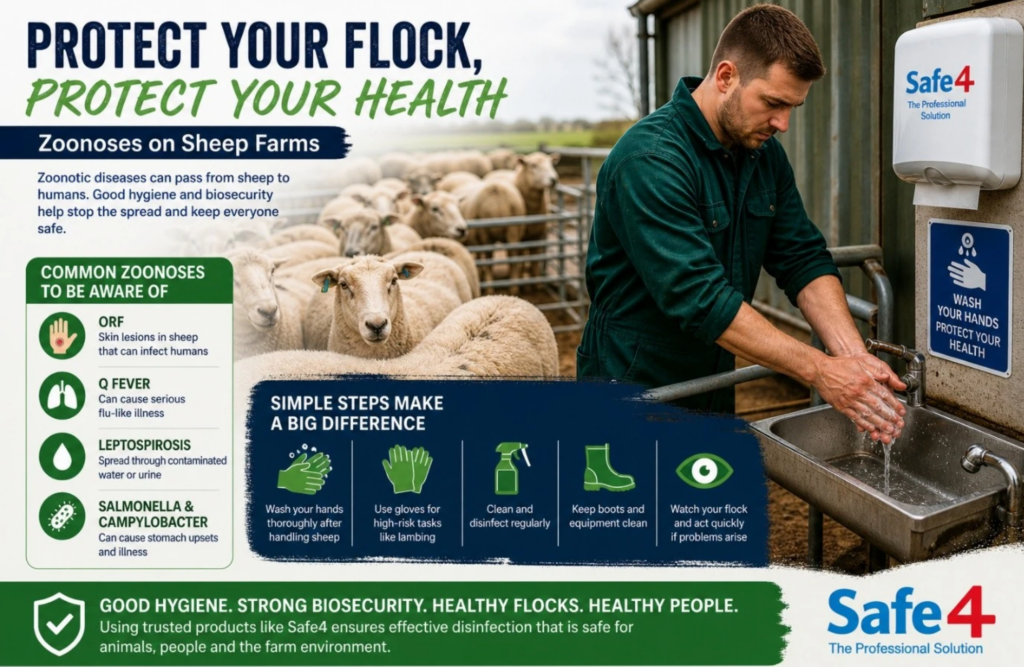
Protecting yourself on the farm
Awareness is important, but day-to-day habits are what actually reduce risk.
Handwashing Wash your hands thoroughly with soap and warm water after handling animals, cleaning housing or touching any equipment that has been in contact with sheep. Do this before eating, drinking or touching your face. Alcohol gel is useful on the move but does not replace proper handwashing.
Personal Protective Equipment Wear disposable gloves when handling sick animals, assisting with births, removing afterbirths or treating wounds. Waterproof overalls and dedicated footwear kept on-site reduce the amount of contamination carried away from the farm.
Dedicated Clothing Farm clothing should stay on the farm. Changing before leaving site significantly reduces the risk of spreading contamination to your home, vehicle or other premises.
Eating and Drinking Never eat, drink or smoke in animal areas. Keep a clean area away from livestock for breaks, and always wash your hands before using it.
Cleaning and Disinfection Regular disinfection of housing, handling equipment, footbaths and hard surfaces is one of the most effective layers of protection. Focus particularly on areas used during lambing, where contamination levels are at their highest.
Download our free guide for a practical summary of zoonotic risks and protective measures you can share with everyone who works with your sheep.
Download the Sheep Farm Biosecurity Guide
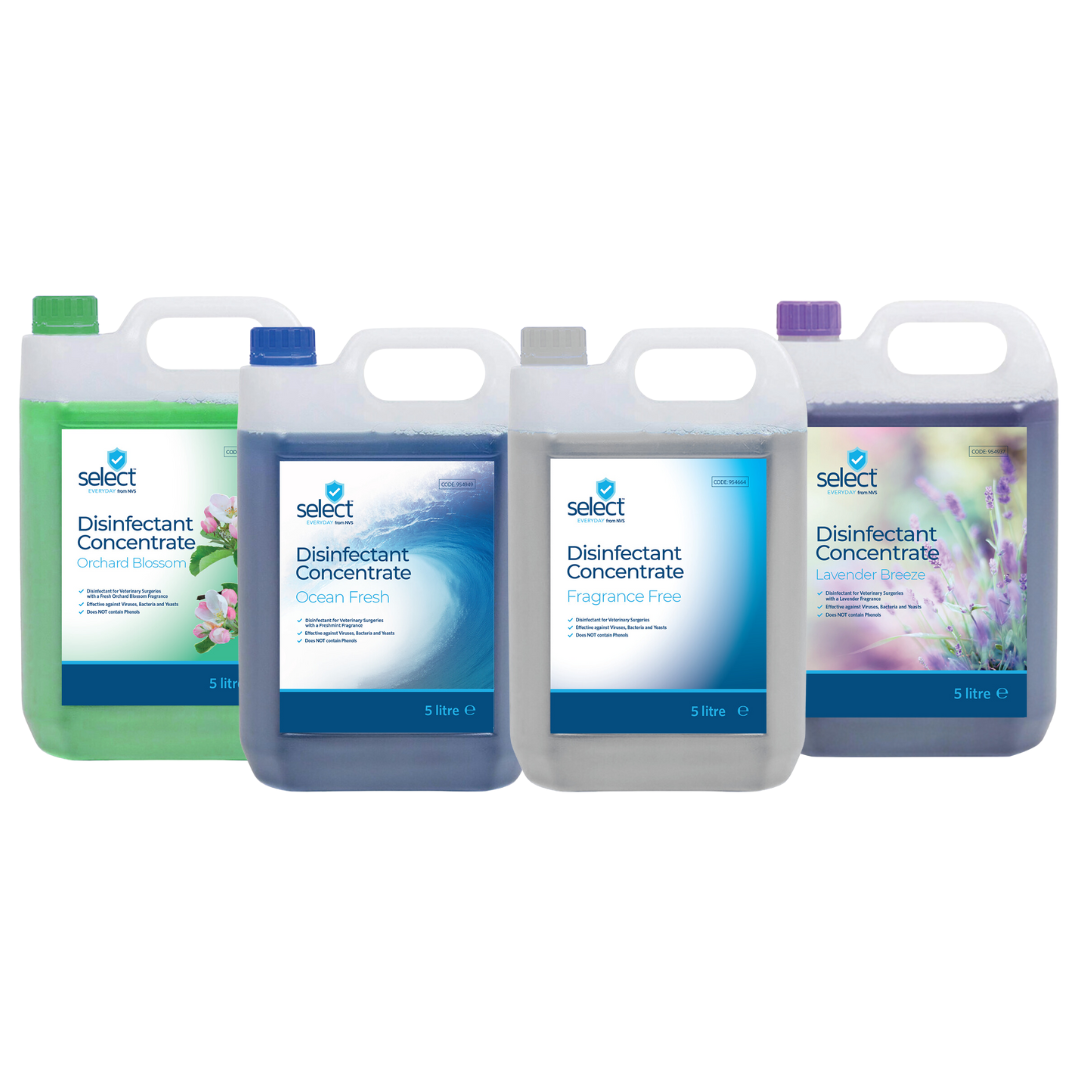
Select from NVS High-level Disinfectant Cleaner
Developed in collaboration with Safe4, the Select from NVS DEFRA-approved Disinfectant Cleaner, is effective against a broad range of bacteria, viruses and fungi, including the pathogens commonly associated with sheep farming. It is non-toxic and non-irritant at recommended dilutions, making it practical to use across housing, equipment and shared handling facilities.

Safe4 has been protecting professionals, those in their care and the environment for more than 20 years and is now recognised as a leading specialist in the biosecurity sector.
Their range of products is meticulously designed and thoroughly tested to ensure superior protection and has been specifically formulated to replace the harsh and hazardous cleaning products, commonly used in the professional environment.
Related products