
When clinical excellence is not enough
By Dr John Taylor, MA VetMB MRCVS, Founder, Director and Veterinary Surgeon – Taylor Vets
Twelve months ago, I sat in a meeting with my accountant reviewing another year of solid clinical performance. Revenue was healthy; client feedback was positive; the team was stable. By every traditional measure, the practice was succeeding. Yet I left that meeting with a growing unease I could not articulate.
The catalyst was not a single event but a convergence. Mobile veterinary services began appearing in our area with increasing frequency. A dedicated home euthanasia service launched locally, targeting one of the most emotionally significant moments in pet ownership. The Competition and Markets Authority announced its market investigation into veterinary services, triggered by an unprecedented 56,000 public and professional responses to its call for information.
Meanwhile, the broader market volatility was impossible to ignore: corporate activity becoming increasingly unpredictable with both acquisitions and divestments reshaping local markets; staff costs surging; client affordability declining; and new business models emerging monthly. Suddenly the ground beneath independent practice felt considerably less stable.
I realised then that I had been running a practice without leading one. I was clinically excellent and operationally competent, but I had no strategic direction. I could not answer the fundamental question every practice owner must eventually confront: where is this business going, and why?
This article shares two strategic tools that transformed how I think about my practice’s future: PESTLE analysis and Porter’s Five Forces. Together, they provide a systematic method for understanding your external environment and competitive position. More importantly, they lead to a critical question that most practice owners never explicitly address: have we built something genuinely valuable that clients and colleagues choose to be part of, or are we competing in an open market where only operational excellence determines success?
PESTLE: Mapping your external environment
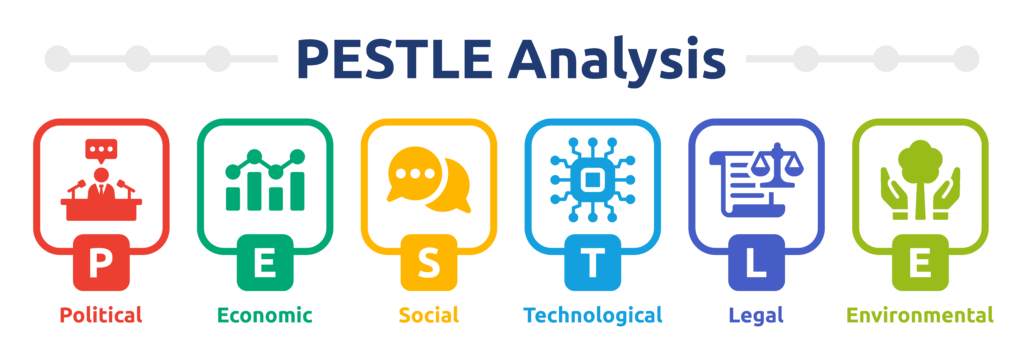
PESTLE analysis examines six categories of external factors that shape your operating environment. Unlike internal analysis, which focuses on what you control, PESTLE forces you to confront what you cannot control but must anticipate. The current veterinary market provides stark illustrations of each factor.
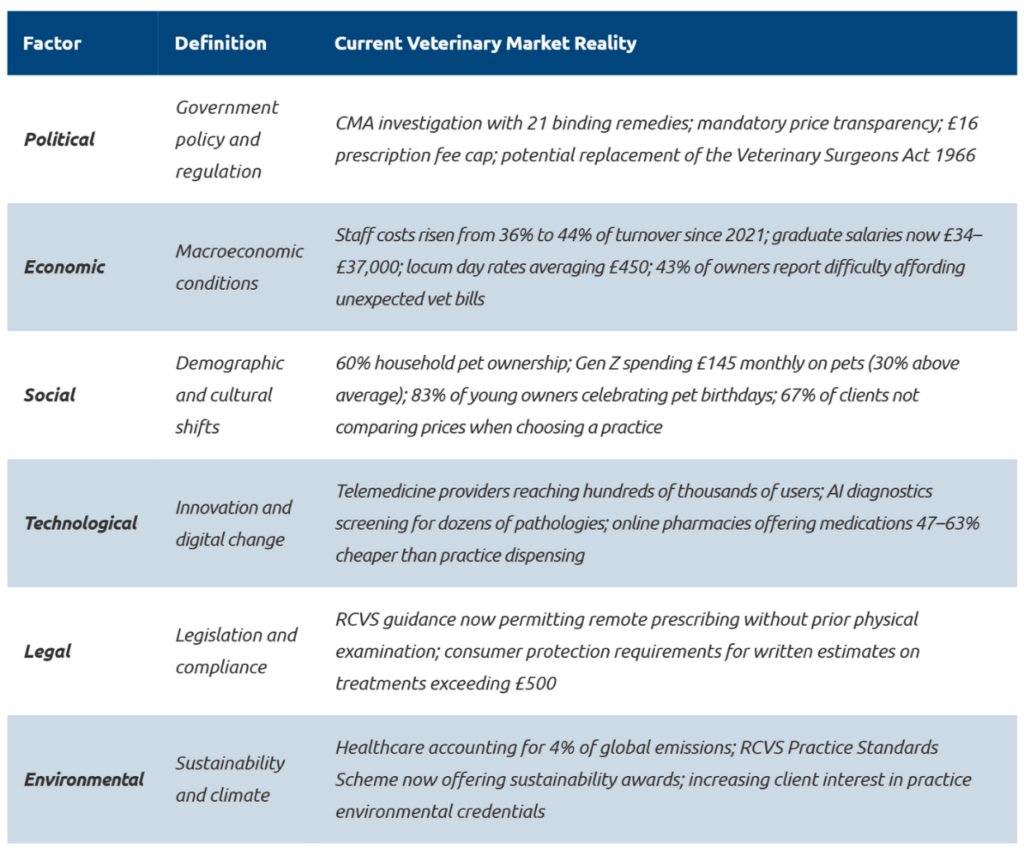
The value of PESTLE lies not in completing it once, but in maintaining it as a living document reviewed quarterly. When I first conducted this analysis with my practice manager, we identified seventeen distinct factors that would influence our business over the following three years. We had previously discussed none of them systematically.
A current example: The CMA Investigation
The CMA investigation demonstrates why systematic environmental analysis matters. When I applied PESTLE thinking to this single development, the implications multiplied across categories.
Under Political, the 21 proposed remedies include mandatory publication of standardised price lists, itemised billing, and disclosure of corporate group ownership. The investigation found that over 80% of practices display no pricing information online; this will change, whether practices choose to lead or are compelled to follow.
Under Economic, the proposed £16 cap on prescription fees (down from the current £23.63 average) and mandatory client notification about cheaper alternatives could significantly impact medicine revenue, which represents approximately 38% of small animal practice turnover.
Under Social, the investigation revealed that 38% of pet owners did not know they could request a written prescription to purchase medications elsewhere. Once informed, client behaviour will shift. The 25% of owners who have already declined recommended treatment due to cost may become more vocal about value.
This single development touches every PESTLE category. Without systematic analysis, these connections remain invisible until they become crises.
Porter’s Five Forces: Understanding competitive dynamics
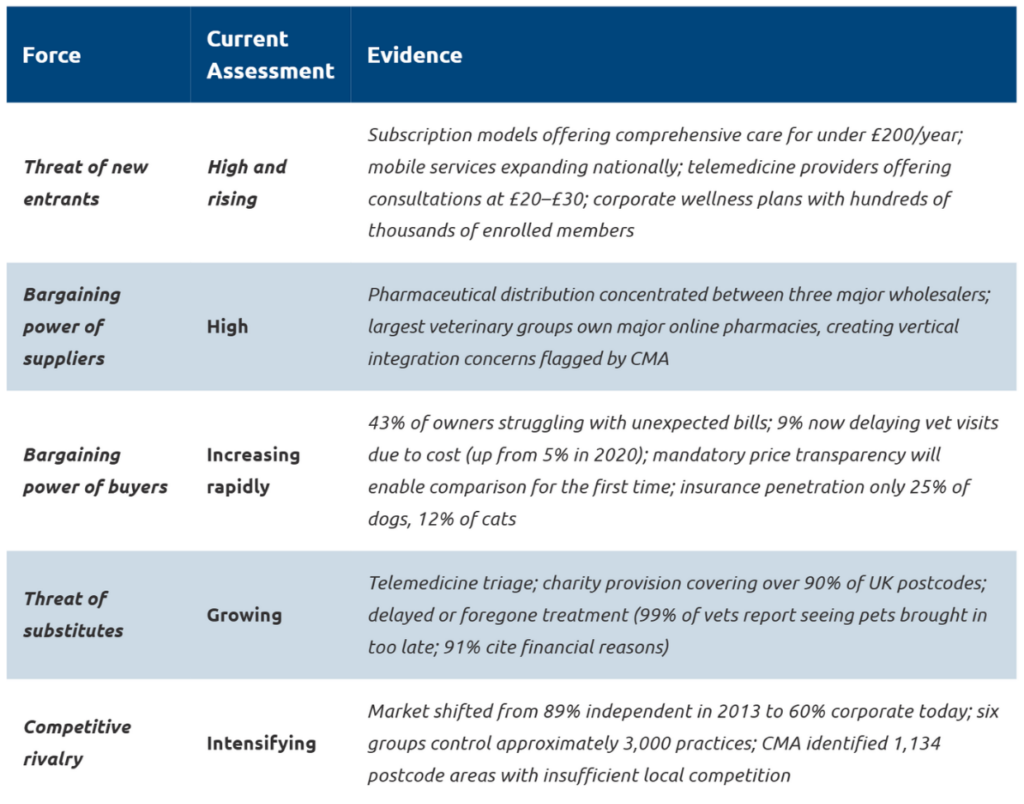
While PESTLE examines the broad environment, Porter’s Five Forces analyses the competitive dynamics of your market. Applied to UK veterinary practice today, each force reveals strategic imperatives.
However, Porter’s framework, whilst intellectually useful, can mislead practice owners into treating all five forces as equivalent. Strategic thinkers Bruce Greenwald and Judd Kahn argue in Competition Demystified that one force dominates all others: barriers to entry. Without barriers to entry, no sustainable competitive advantage exists, and strategy becomes an exercise in operational efficiency rather than strategic positioning.
This insight reframes strategic analysis from a complex multi-variable assessment to a focused inquiry: can competitors freely enter my market and replicate what we offer? If yes, I have no strategy; I have only execution.
The critical question: Have you built something worth staying for?
Greenwald and Kahn identify only three genuine sources of competitive advantage, and their analysis is somewhat sobering for veterinary practice owners.
Supply Advantages (Cost): Proprietary technology, access to scarce resources, or lower operating costs. In veterinary practice, these advantages are rarely durable. Any equipment you purchase, your competitors can purchase. Any efficient process you develop, they can replicate. Corporate groups achieve some supply advantage through centralised procurement, but this alone does not create sustainable competitive position.
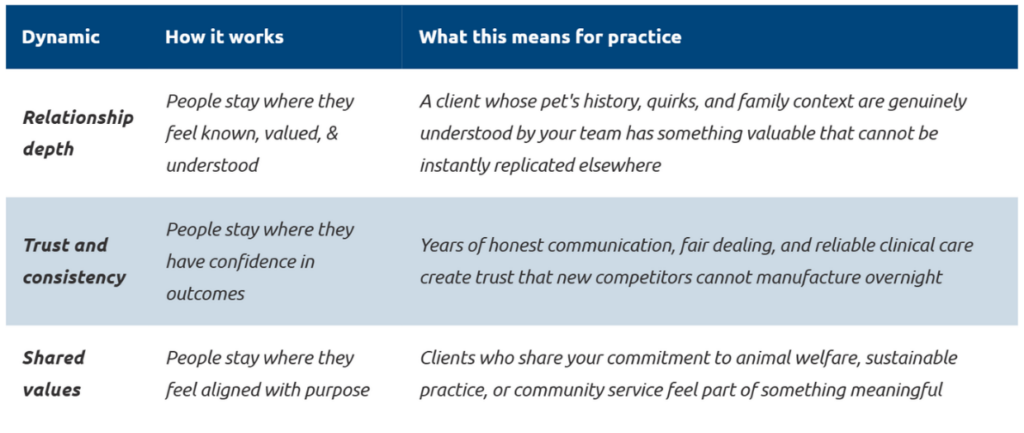
Demand Advantages (Earned Loyalty): This is where veterinary practice has genuine potential. The academic literature uses the term “customer captivity,” but I find this framing unhelpful; it suggests manipulation rather than genuine value creation. The real question is whether you have built something so valuable that clients and colleagues actively choose to stay.
Three dynamics earn loyalty: (see table)
Economies of Scale (Combined with Earned Loyalty): Critically, Greenwald and Kahn emphasise that economies of scale alone do not constitute competitive advantage. Scale only creates barriers when combined with loyalty within a defined market. A corporate group achieving scale nationally gains little advantage in your specific postcode if your clients genuinely value their relationship with your practice.
This creates what the authors term “local economies of scale”: advantages that exist within specific geographic or customer segments rather than across entire industries. For veterinary practice, this insight is liberating. You do not need to compete nationally. You need to build something so valuable locally that people choose to stay.
The same logic applies to your team
This framework applies equally to colleague retention. The veterinary profession faces acute workforce shortages; supply meets only 90% of demand, EU registrants fell 68% between 2019–2021 following Brexit, and locum rates reflect the scarcity.
I once heard a business leader say that every employee’s main aim should be to find a better job; your role as an employer is to ensure you are always their best option. This reframes retention from a defensive exercise into a continuous challenge: are we genuinely the best place for this person to build their career?
The same three dynamics apply: Relationship depth, trust and consistency, and shared values. (see table for breakdown)
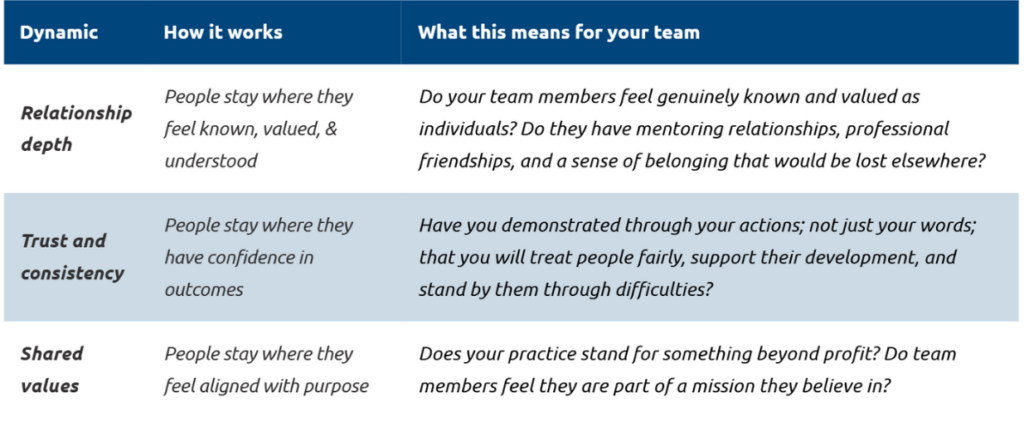
Practices that build these qualities do not need to compete purely on salary. They offer something more valuable: a place where talented people choose to build their careers because it aligns with who they want to be.
Strategic implications: Two different playbooks
This analysis leads to a binary strategic choice, and intellectual honesty about which situation applies to you is essential.
#1. If you lack genuine differentiation
If competitors can freely enter your market and replicate your offering; if clients show no particular loyalty and switch readily based on price or convenience; if your team would leave for a modest pay increase; then you operate in what Greenwald and Kahn call an open market.
In open markets, strategy collapses into operational excellence. The prescription is clear:
Cost management becomes paramount. Every inefficiency destroys value. Benchmark your cost structure against best-in-class operators and eliminate performance gaps. Staff costs have risen from 36% to 44% of turnover across the sector; if yours exceed this, you face structural disadvantage.
Capacity discipline requires avoiding overinvestment that cannot generate returns. In a market without differentiation, excess capacity simply intensifies price competition.
Operational excellence in every client interaction becomes your only sustainable differentiator. If clients can easily switch, every consultation must demonstrate value.
This is not a comfortable conclusion, but it is honest. Many practices that believe themselves strategically advantaged are in fact competing in open markets where superior execution determines success.
#2. If you have built (or can build) something worth staying for
If you have built genuine, earned loyalty; if clients return because they value their relationship with your team and trust your judgement; if colleagues stay because they feel part of something meaningful; then your strategy should centre on deepening and extending these qualities.
Invest in relationships continuously:
- Ensure continuity of care so clients see the same vet who knows their pet’s history
- Train your team in communication that builds trust, not just clinical competence
- Create systems that capture and use knowledge about each client and patient, making every interaction feel informed by relationship
Build trust through transparency and fair dealing:
- Be honest about costs, prognosis, and options; trust is built through difficult conversations handled well
- Price fairly and explain your value clearly; the CMA finding that 67% of clients do not compare prices will not survive mandatory transparency
- When mistakes happen, acknowledge them and make them right; this builds more trust than pretending perfection
Align around shared values:
- Articulate what your practice stands for beyond clinical excellence
- Make decisions visibly consistent with your stated values
- Engage with your community in ways that demonstrate genuine commitment
Look after your team as you would your clients:
- Invest in professional development that serves their career goals, not just your operational needs
- Create a culture of psychological safety where people can raise concerns, admit mistakes, and ask for help
- Pay fairly, but recognise that the practices with the best retention offer something beyond salary: purpose, belonging, and growth
Dominate your local market rather than competing broadly. The CMA identified 1,134 postcode areas where consumers may lack sufficient local competition. If you operate in such an area, your strategic imperative is to serve that market so well that clients and colleagues cannot imagine going elsewhere.

Applying this thinking to current threats
The mobile services and home euthanasia providers that triggered my strategic awakening look different through this lens.
Mobile practices offering convenience and specialist home services targeting specific emotional moments are competing on accessibility and experience. They target clients who lack strong existing relationships; those for whom veterinary care is a transaction rather than a relationship.
My strategic response was not to compete on their terms; matching their pricing or convenience model would sacrifice margin without strengthening our genuine differentiators. Instead, I asked: where have we built something truly valuable, and how do we deepen it?
The answer lay in clinical relationship continuity. Our longest-standing clients value seeing the same vet who has known their pets for years. They trust our judgement because it is informed by history. They would genuinely miss what we offer; not because we have trapped them, but because we have built something worth valuing.
For these clients, we invested in deepening the relationship: more proactive communication, more comprehensive preventive care planning, more emphasis on the continuity and knowledge that only comes from years of genuine care.
For price-sensitive clients with weaker relationships, we accepted that some would leave for alternative providers. Attempting to retain them through price-matching would have destroyed value without building anything lasting. Better to focus resources where we can genuinely serve people well.
This is the strategic clarity that this analysis provides. Not every client relationship has the same depth. Not every competitive threat requires response. Focus resources where you can build something genuinely valuable.
The cultural dividend
The most unexpected benefit of systematic strategic planning was not improved decision-making; it was improved culture. When I began sharing our environmental and competitive analysis with the wider team, something shifted. Previously, strategic decisions appeared to descend from above without context. The team implemented changes without understanding why. Engagement was compliance rather than commitment.
Now, when I explain that we are investing in nurse training because clinical relationships are central to who we are, the team understands. When I describe the economic pressures our clients face; the 43% struggling with unexpected bills, the 25% declining recommended treatment; and explain how our commitment to honest communication fits our values, the team feels part of something larger than transactions.
This shared understanding created a sense of collective purpose. The values we articulated as a practice became anchored in a strategy everyone could see and understand.
Your starting point:
Week 1: PESTLE Foundation
Block two hours with your practice manager. Work through each PESTLE category using the examples in this article as prompts. For each category, identify at least two factors relevant to your specific practice and location. Rate each for likelihood and impact.
Week 2: Competitive Mapping
Assess each of Porter’s Five Forces for your local market. Be honest about where pressures are intensifying. Research your specific competitors: their price points, service offerings, and market positioning.
Week 3: The Critical Question
This is the week most practice owners skip, and it matters most. Ask honestly: have we built something genuinely worth staying for? Where does our earned loyalty come from; for clients and for colleagues? Is it strong enough to sustain our competitive position, or are we operating in an open market where only operational excellence determines success?
If you conclude that genuine differentiation is weak, redirect resources from strategy development to operational improvement. Benchmark relentlessly and eliminate performance gaps.
If you conclude that you have built; or can build; something truly valuable, identify specific actions to deepen it. What strengthens relationships? What builds trust? What makes our practice a place people choose to be part of?
Month 2: Team Communication
Share a simplified version of your analysis with your senior team. Explain the external pressures, your assessment of what makes your practice worth choosing, and your strategic response. Invite their observations.
Quarterly: Establish the Rhythm
Schedule recurring strategic review sessions. Update your analyses based on new information. Adjust your strategic responses as the environment evolves.
The choice before you
The veterinary market will continue to evolve. The CMA review will conclude in early 2026 with binding remedies that will reshape practice economics. New competitive models will emerge. The shift from 89% independent ownership in 2013 to 60% corporate today will continue unless independent practices build something genuinely worth choosing.
Greenwald and Kahn’s core message bears repeating: sustainable competitive advantage is rare, and practices should be honest about whether they possess it. Many practices that believe themselves strategically advantaged are in fact competing in open markets where superior execution determines success.
For those fortunate enough to have built something genuinely valuable, the prescription is clear: keep building. Deepen what you have. Resist the growth imperative that leads practices into markets where their advantages do not apply.
Strategic planning did not eliminate uncertainty. It gave me the clarity to lead through it; and the honesty to recognise where we had built something genuinely worth protecting, and where we simply needed to execute better than anyone else.
More about the author:
Dr John Taylor, MA VetMB MRCVS, Founder, Director and Veterinary Surgeon – Taylor Vets

Dr John Taylor qualified from Cambridge University as a vet in 2000 and joined the Royal Army Veterinary Corps. In 2005 he set up a veterinary practice in Middleton Cheney, and since 2019 has been helping other practices to develop their clinical standards as well helping with more advanced surgical procedures.
He is a keen runner and cyclist and has competed in various endurance and Ironman races. He enjoys horse riding, and is currently about to learn how to start driving my horse Atlas. He’s married to Angela and has two boys, Michael and Joe.
The article was originally posted in The Cube magazine, February 2026 issue. Click here to read the magazine.